Speak Clearly and Confidently: Even When the Stakes Are High
Imagine, yesterday you gave a presentation to the company’s board of directors. This morning you are replaying that meeting in your head thinking, Why didn’t I say that better? You planned what to say, but once you started, your thoughts raced faster than your words.
That’s the classic mark of an overthinker, smart, prepared, and so focused on getting it right that the message gets tangled.
The great thing is that clarity doesn't require extra knowledge. Instead, it means purposely saying less. If you tend to overanalyze every meeting after the fact, beating yourself up about what you could have and should have said, these three habits will help you sound clear, confident, and composed in the moment.
1. Focus on one idea at a time
Overthinking starts when you try to say everything at once. You want to explain the full picture, anticipate questions, and make sure everyone understands the details. But your audience doesn’t need all the details. They do need direction.
Before your next meeting or presentation, ask yourself:
“If they remember just one thing, what should it be?”
Write that one idea at the top of your notes. Every example, statistic, or story should point back to it.
For example:
Instead of three different reasons your process works, choose the strongest one and illustrate it clearly.
Instead of explaining how your solution works in minute detail, focus on why it matters to your audience.
When you narrow your message, you sound more decisive and your audience listens longer.
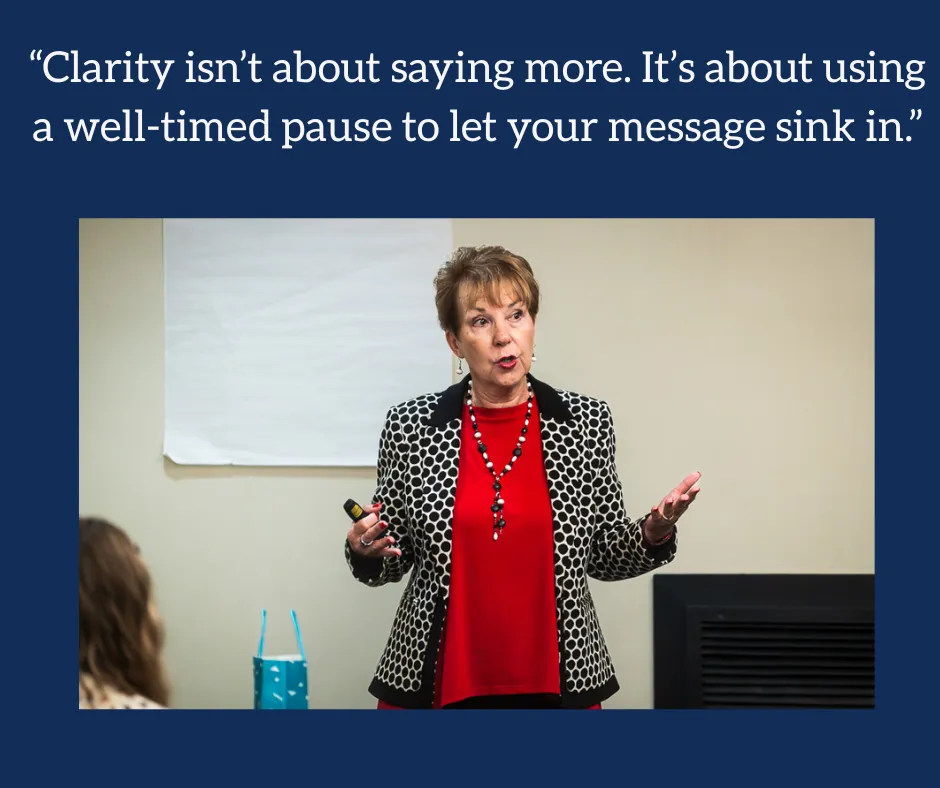
2. Use “Power Pauses”
Overthinkers tend to rush. Silence feels like danger, so you fill it with words. But here’s the truth: a pause is not a problem, it’s power.
A simple one-second pause between key ideas does three things:
It lets your audience process what you’ve said.
It gives you time to breathe and reset your thoughts.
It projects confidence because you’re not afraid of the quiet.
Try this exercise: record yourself explaining a project update. Then listen back and mark every spot you could pause instead of adding filler words like “um,” “you know,” or “kind of.” The difference in presence is immediate.
If you ever worry about sounding robotic, remember clarity comes from cadence, not speed. The best communicators sound measured, not memorized.
3. Create a “mental reset button”
When your thoughts spiral mid-sentence, it’s easy to lose your place or trail off. Instead of panicking, build a reset phrase that helps you regroup smoothly.
Try these:
“Let me simplify that.”
“Here’s another way to look at it.”
“To summarize…”
These short transitions buy you a moment to catch your breath and guide the audience back on track without anyone noticing.
When used with intention, they turn moments of doubt into signals of control. That’s the hallmark of a confident communicator: the ability to recover gracefully and keep the conversation flowing.
Overthinking is a form of care—but it comes at a cost
Professionals like you don’t overthink because you’re unsure; you do it because you care deeply about doing things well. The challenge is learning when to stop analyzing and start connecting.
Your audience doesn’t want perfection. They want presence. They want to feel that you’re speaking to them, not at them. When you focus less on saying everything perfectly and more on saying what matters clearly, your authority rises. You project calm. You become memorable.
Try this before your next big meeting
Write your one key message in a single sentence.
Add three supporting points only if they directly reinforce that message.
Rehearse it once aloud—then stop. No endless tweaking.
Before you speak, take one Power Pause to breathe.
You’ll sound more concise, confident, and trustworthy—and you’ll feel lighter doing it.
You don’t need to speak faster. You need to think clearer.
That’s the shift we practice inside the Confident Communicator Collective—how to turn clarity into confidence, and confidence into influence.
This month, we’re focusing on breaking the overthinking cycle and replacing it with calm, clear communication habits that stick.
If you’re ready to stop rehearsing in your head and start showing up with ease, join us when enrollment opens December 1.
Clarity isn’t about using more words; it’s about creating a message that has meaning for your audience.


