
A client mentioned something to me recently that I found interesting.
Her operations manager had told the team a project would be completed at the end of the month. Except there were delays and he failed to meet deadline. He explained the delay to his manager, but he never circled back with the team that had been waiting on it.
Small moment. Nothing dramatic happened. Yet three people on that team quietly started double checking his timelines from that point forward.
That is the real story behind every leader's words. Every update, every promise, every answer to a question in a meeting is doing one of two things. It is building trust, or it is breaking it.
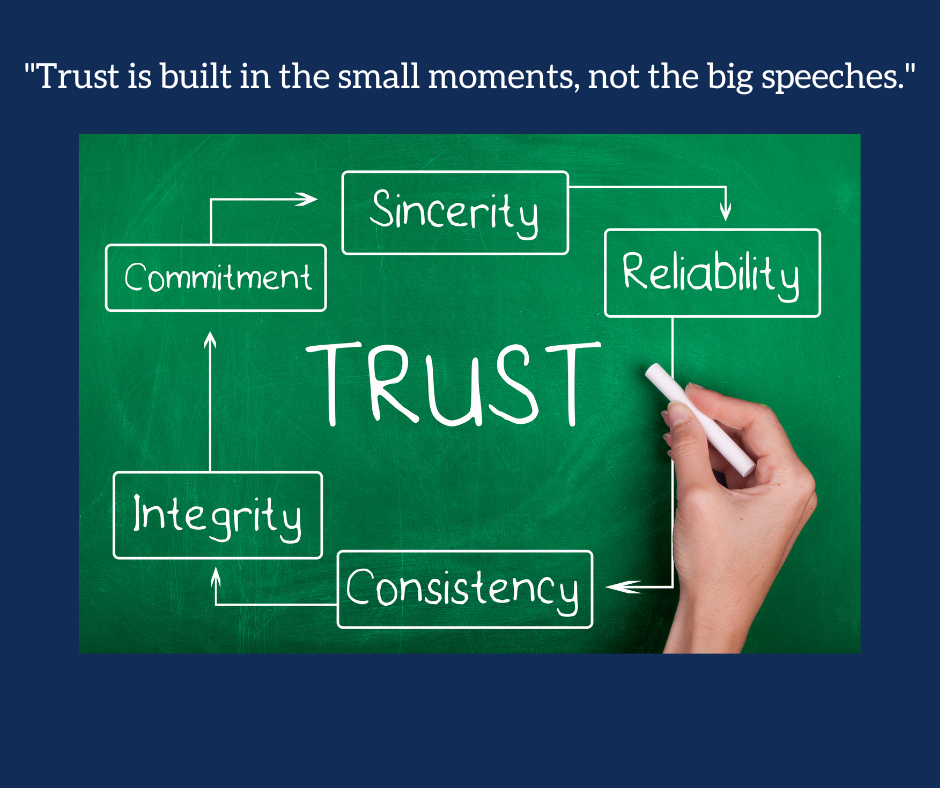
Trust is built in the small moments, not the big speeches
Leaders often picture trust as something earned through a single powerful moment: the crisis handled well, the honest answer in a tough room, the speech that rallies everyone.
Yes, those moments matter. Yet trust mostly accumulates through the ordinary ones. The Tuesday status update. The answer to a simple question. The way a leader responds when a client asks something they had not prepared for.
Each of those is a small deposit or a small withdrawal.
What erodes trust rarely looks dramatic
Picture these situations:
A leader gives a vague answer rather than admitting they need to check
A message to the team differs from what the client heard the day before
A leader promises a follow up and lets it slide
A question gets a technically accurate answer that leaves the real concern unaddressed
Each one is a small moment. Repeat that pattern across a quarter, and people quietly recalibrate how much weight they give a leader's words. They still nod in the meeting. They just start verifying everything on their own.
That is expensive in a different way than the communication gap I named in the first post of this series. That gap slows people down. This one makes them stop believing in you.
What trust actually sounds like
The leaders who earn trust through their words tend to do three specific things:
They say what they know, and name what they do not. "Here is what I can confirm, and here is what I am still finding out" carries far more weight than a confident guess that turns out wrong.
They close the loop. When something changes, they return to the people affected, even when the update is inconvenient to deliver.
They say the same thing to everyone who needs to hear it. The version a client hears matches the version the team hears. Consistency is what makes a message believable over time.
None of this asks a leader to have every answer. It asks them to make their words something people can build on.
A question worth asking your leadership team
At your next 1-2-1 meeting with a leader in your business, ask them to identify one recent moment when their words built trust with a client or team member, and one moment they wish they had handled differently.
Remember, your goal is to remain curious and listen. The conversation that follows will allow you to coach your team more about communication and trust than any framework could on its own.
If this pattern sounds familiar in your organization, I am presenting live on this exact topic, "3 Speaking Mistakes Leaders Make," on Monday, September 21st. It is a practical look at the moments that quietly cost leaders credibility, and what to do instead. Reply to this post and I will send you the details.