Blogs
Why More Training Isn’t the Answer: The Real Reason Your Message Isn’t Landing
Why I told a potential client they might NOT need training.
Sounds strange right? A presentation coach telling a potential client the last thing they need is more "skills training". Here’s what happened in my business recently.
An HR leader who was looking for a training program for his directors was referred to me. The problem? Their monthly all-staff meetings were becoming a marathon of "too much".
The feedback from the employees in the room was consistent: It’s too long. It’s too detailed. It feels like a waste of time.
During our conversation, I discovered the leaders who needed training are seasoned pros, people who are in front of customers and stakeholders every day. They aren’t nervous, and they certainly don’t lack confidence. After listening to his situation, I responded with: "I don’t know if they need training... I think they need a critical eye on what they’re sharing”.
Many companies hold employee meetings on a regular cadence with good intentions. Senior leadership wants to share important developments, foster transparency, and ensure everyone feels informed and included in organizational progress. The hope is that by providing these updates, teams remain aligned and can act with confidence and clarity.
What can happen is information overload.
Each leader is speaking from their knowledge and expertise. They know their department inside and out. And because they care, they want to share everything. And while the Finance lead is deep in a spreadsheet or Engineering is diving into the weeds of a specific project, the audience is checking out.
Your audience does not need your full story; they need the part that helps them do their jobs better.
The Hidden Cost of Over-Explaining
When leaders over-explain, three things happen:
You lose attention.
People can’t follow what isn’t relevant to them.You dilute your message.
The more you say, the less people remember.You waste time.
And in a business setting, time is everything.
Editing is an Act of Leadership
Real communication isn't about adding more slides or learning a new "stage presence" trick. It’s about the discipline of editing. It’s shifting from “What do I want to report?” to “What do they actually need to hear?”.
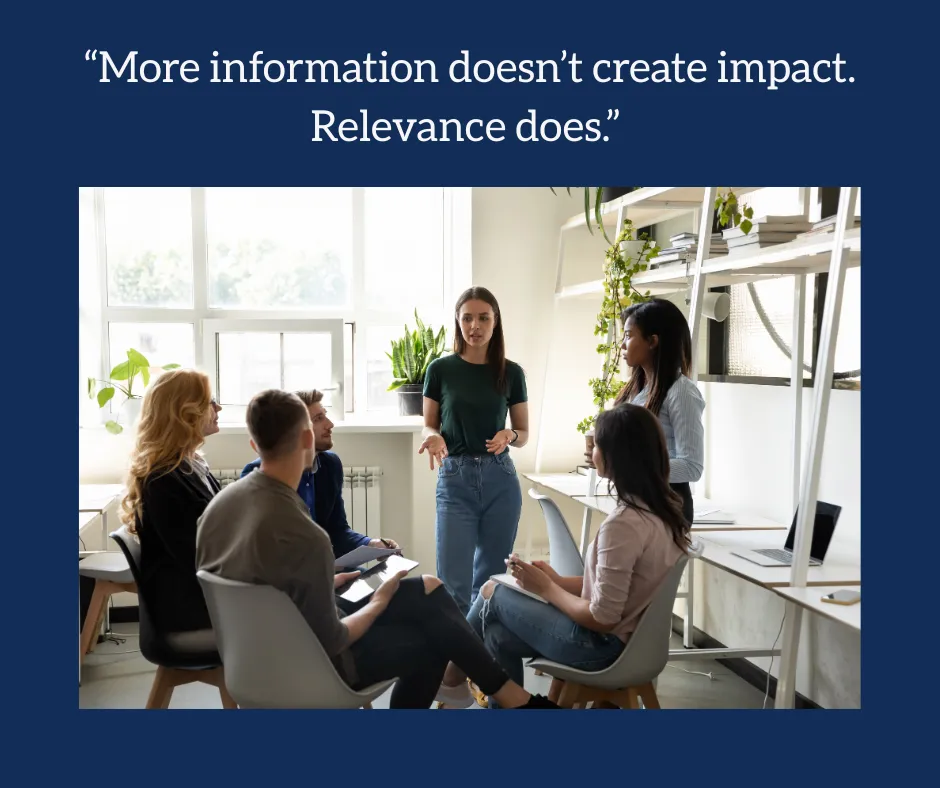
Typically, it is not more content, it is content that is relevant to your audience.
It’s about providing meaningful information in the right way, with the right amount of detail, in a timely manner. Effective updates are about delivering the essential, not overwhelming with excess, so people receive what they need to do their best work.
Imagine approaching your communication like a tour guide. A great tour guide doesn’t recite every fact about a city, they curate the journey, highlighting only what’s most relevant, memorable, and useful for their group. They observe their audience, adjust their route if attention drifts, and explain complex sites simply so everyone stays engaged and informed. In the same way, leaders should guide their audience through information, focusing on what will help them reach their destination efficiently and with clarity.
The next time you’re preparing to speak, ask yourself:
Am I sharing this to prove my expertise, or to create clarity for them?
What information will help my audience do their job and what can I leave you?
If I could only keep one slide, which one would it be?
Your audience won't reward you for how much you know. They’ll reward you for making it make sense.
Would you like a complementary evaluation of the material for your next presentation? Click here to book your call today.