Blogs
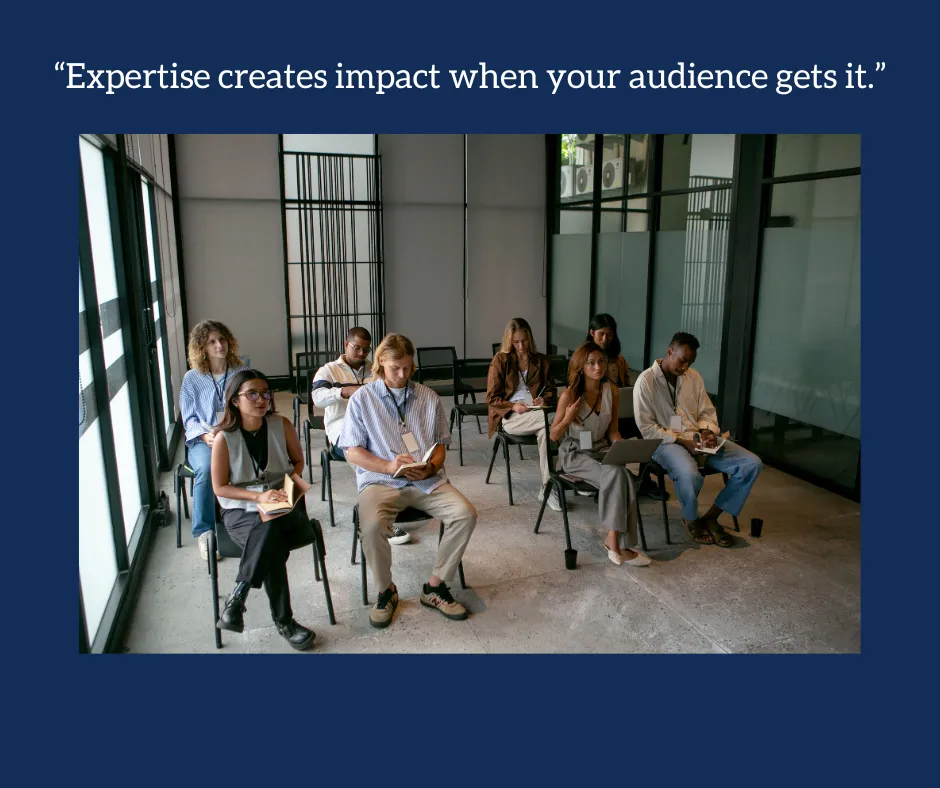
Translate Your Expertise So Your Audience Actually Gets It
Recently, I guided a cybersecurity officer who had been asked to present a seminar to his organization's clients.
He knew the subject inside and out. Expertise was never the issue.
The challenge was translating that expertise for his audience, then bringing enough energy to the room that people leaned in instead of tuning out.
Many of the clients had built their wealth before the internet, smartphones, online banking, and mobile apps became part of everyday life. They needed to understand the cybersecurity risks surrounding them, yet a presentation filled with technical language, unfamiliar terminology, and too many details could quickly leave them feeling overwhelmed.
Our work centered on three priorities: refining the presentation, clarifying what his clients needed most, and shaping a facilitation style that would make the topic approachable while encouraging questions.
A few days after the seminars, he sent me this update:
“They were exceptionally well received by our clients, and the consensus across the team is that we'll take this format and expand it into a roadshow next year. So, all in all, mission accomplished! I truly appreciate your partnership and everything you did to help us get here.”
His expertise remained the same.
The way he communicated it changed.
When Knowledge Creates Distance
The longer you work within an industry, the more familiar its language becomes.
Acronyms make perfect sense. Technical terms feel like everyday words. Connections between ideas seem obvious because you have made them hundreds of times.
Remember, your audience is most likely hearing those words and ideas for the first time.
This is often called the curse of knowledge. Once you understand something deeply, remembering what it felt like before you understood it becomes difficult.
Experts can begin to assume that other people share the same background information, recognize the same terminology, and understand why certain details matter.
That knowledge gap creates distance.
The audience may smile, nod, and stay quiet while trying to keep up. They may hesitate to ask a question because everyone else appears to understand. They may leave with pages of information and very little energy for what to do next.
The presenter walks away believing the audience received the message.
The audience walks away wondering what the message was.
Start With What Matters to Them
Experts often begin with what they know.
Effective communicators begin with what the audience needs, and with what will make them want to lean in.
For the cybersecurity seminar, the goal was awareness. Clients needed to recognize the risks most relevant to their lives and feel ready to respond, rather than become cybersecurity professionals themselves.
That distinction shaped the presentation, and the energy behind it.
Before creating slides or deciding what information to include, ask these 5 questions:
What does this audience already understand?
What might feel unfamiliar or intimidating?
Why does this subject matter to them?
What do they need to remember?
What action can they feel ready to take?
These questions change the way you organize and deliver your expertise. Instead of asking, “What do I know?” you begin asking, “What do they need from me?”
Translate Without Talking Down
Simplifying a message is sometimes mistaken for making it simplistic.
They are very different.
Making an idea simplistic removes important meaning. Making it simple removes unnecessary barriers.
Your audience rarely needs every technical detail before grasping the central idea. They need a clear starting point, familiar language, and examples that connect the subject to their experience, along with enough energy in the delivery to keep them present.
A cybersecurity professional may use terms such as phishing, multifactor authentication, credential stuffing, or social engineering every day. The terms are accurate, yet accuracy alone guarantees nothing about understanding.
A relatable scenario can make the same risk immediately clear:
You receive a text that appears to be from your bank. It says suspicious activity has been detected and asks you to click a link. The message creates urgency because urgency reduces the likelihood that you will pause and question it.
Now the audience can picture the situation. The technical concept becomes relevant, memorable, and something worth leaning in for.
The best communicators keep the substance while clearing away the fog.
Facilitate a Conversation
Complex subjects often become easier to understand when the audience has room to participate, and easier to remember when the room has energy in it.
That is why his facilitation style became part of the work too, alongside the content itself.
Rather than treating the seminar as a one way transfer of information, he created opportunities for clients to ask questions, consider real situations, and connect the material to their own lives. He brought energy to the room, and that energy invited people in.
This requires confidence from the presenter.
Questions may lead the conversation somewhere unexpected. Participants may reveal confusion about something that seemed clear. The planned timing may need to shift.
That flexibility is a strength.
When an audience feels comfortable asking questions, and feels the presenter's energy inviting them to engage, the presenter gains valuable information about what they understand, what concerns them, and what they need next.
The goal is more than finishing the slides.
The goal is creating understanding, and an audience that stays engaged long enough to receive it.
Your Audience Measures the Value of Your Expertise
Your credentials establish that you know your subject.
Your communication, and the energy you bring to it, determines whether anyone can use what you know.
This applies far beyond cybersecurity. It matters when an engineer explains a project, an accountant presents financial results, an HR leader introduces a new policy, or a business owner describes the company's value.
Expertise becomes influential when people can understand it, remember it, feel engaged by it, and act on it.
Before your next presentation, take one more look at your message from the audience's point of view. Ask the following questions:
Where might your knowledge be causing you to move too quickly?
Which words make perfect sense inside your industry but create distance outside it?
What can you remove, translate, or illustrate, and where can you add energy that pulls your audience in?
Proving how much you know rarely requires sharing everything you know.
Instead, show the value of your expertise by making it accessible, and engaging, to the people who need it.
Your Turn
Think about the subject you know best.
Could you explain why it matters to someone encountering it for the first time, without relying on your title, industry terminology, or a screen full of slides, and with enough energy that they want to keep listening?
Your expertise is valuable.
Make sure your audience can feel why.