Blogs
You Don’t Need More Confidence, You Need a Presence Strategy
You’ve been told the same thing your whole career.
"Just believe in yourself."
"Fake it till you make it."
"Confidence will come with experience."
Here’s what no one tells you:
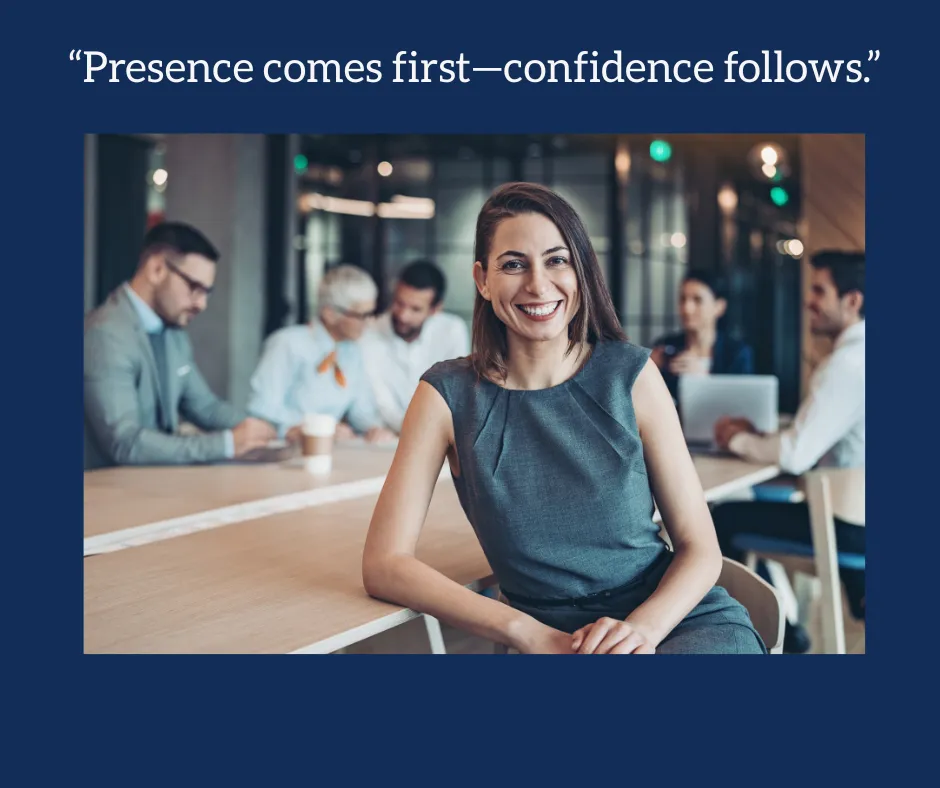
Confidence is not a prerequisite for presence. It’s a result of it.
And if you’ve been waiting to feel confident before you show up fully, you’ve been waiting for something that works in reverse.
The Confidence Myth
Most professionals believe that if they could just feel more confident, everything else would fall into place.
Their voice would stop shaking. They’d stop second-guessing themselves. They’d finally speak up in the meetings that matter.
But confidence isn’t what creates those results.
Strategy does.
When you have a clear, repeatable presence strategy, you don’t have to rely on how you feel in the moment. You have a framework to fall back on, even when your nerves are loud.
What Presence Actually Requires
Presence is not about being the most polished person in the room. It’s not about having the loudest voice or the most charismatic personality.
It’s about three things:
•Clarity, knowing what you stand for and what you want to communicate
•Consistency, showing up the same way whether the stakes are low or high
•Commitment, staying grounded even when you feel uncertain
None of those are personality traits. All of them are learnable.
The Shift That Changes Everything
I worked with a leader once who was brilliant. She could walk into any room and immediately read what was needed. Her instincts were sharp.
But in group settings, she would go quiet. Not because she didn’t have something to say, because she was waiting to feel ready.
When we shifted her focus from waiting to feel confident toward executing her presence strategy, something changed.
She started speaking earlier in conversations. She kept her language direct. She stopped softening her ideas before she shared them.
Within weeks, her colleagues started asking for her input more consistently. Her manager mentioned it in their next review.
Nothing about her personality changed. Her strategy did.
Three Signs You’re Relying on Confidence Instead of Strategy
1. You wait until you feel ready to speak up.
Presence shows up before the feeling does.
2. You adjust your message based on who is in the room.
A strategy stays consistent. Second-guessing is a habit, not a read on the audience.
3. You rehearse what you’re going to say instead of how you’re going to show up.
Words matter. Your energy before the words arrive matters more.
Where to Start
You don’t need to reinvent yourself. You need a plan for how you show up, before the moment demands it.
That starts with three questions:
•What do I want people to feel after I speak?
•What do I consistently do that undermines that?
•What is one behavior I can practice this week to close that gap?
Those aren’t rhetorical. Write them down. Work through them. Your answers are the beginning of your strategy.
A Quick Reality Check
Think about the last high-stakes moment you walked into, a big meeting, a presentation, a conversation with leadership.
Did you have a presence strategy? Or were you hoping the confidence would just show up?
Because hoping is not a plan.
A strategy is.
Final Thought
Confidence is something you build. Presence is something you practice.
And the best time to start practicing is not when you feel ready.
It’s right now.